Companion Planting
Companion planting can be implemented in almost any environment with minimal effort. Yet the benefits can be immediate with lasting results.
Companion planting is not a new innovation for vegetable growing or gardening. Although you may be unfamiliar with it.
Perhaps you’ve heard of it but have been put off it because it sounds like gobbly-gook. It has, in fact, been used for centuries and shares ancient wisdom passed through generations of gardeners. Although lately, our scientific friends have conducted research that has confirmed its benefits.
Mistakes can be made when it comes to companion planting, but these mistakes should not discourage beginners from practicing this technique. The most common mistake is using large quantities of one type of companion plant with little variety of other types; this can cause an imbalance.
What is companion planting?
At its most basic, companion planting involves placing companion plants together to help each other grow.
It is using nature as an assistant to solve common gardening problems.
Left to itself nature doesn’t create monocultures. Where single crops grow in a field. It creates a diversity of plants. Producing an ecosystem that is more resilient and better able to withstand pests, diseases, and other ecological threats.
Nature has a way of making sure that everything works together. By growing companion plants you can recreate the same in your garden.
You may grow one companion plant to attract beneficial insects that will attack the pests on another. Other plants you grow may instead repel pests. Another plant may be placed to enhance the surrounding soil, providing optimum conditions for growth.
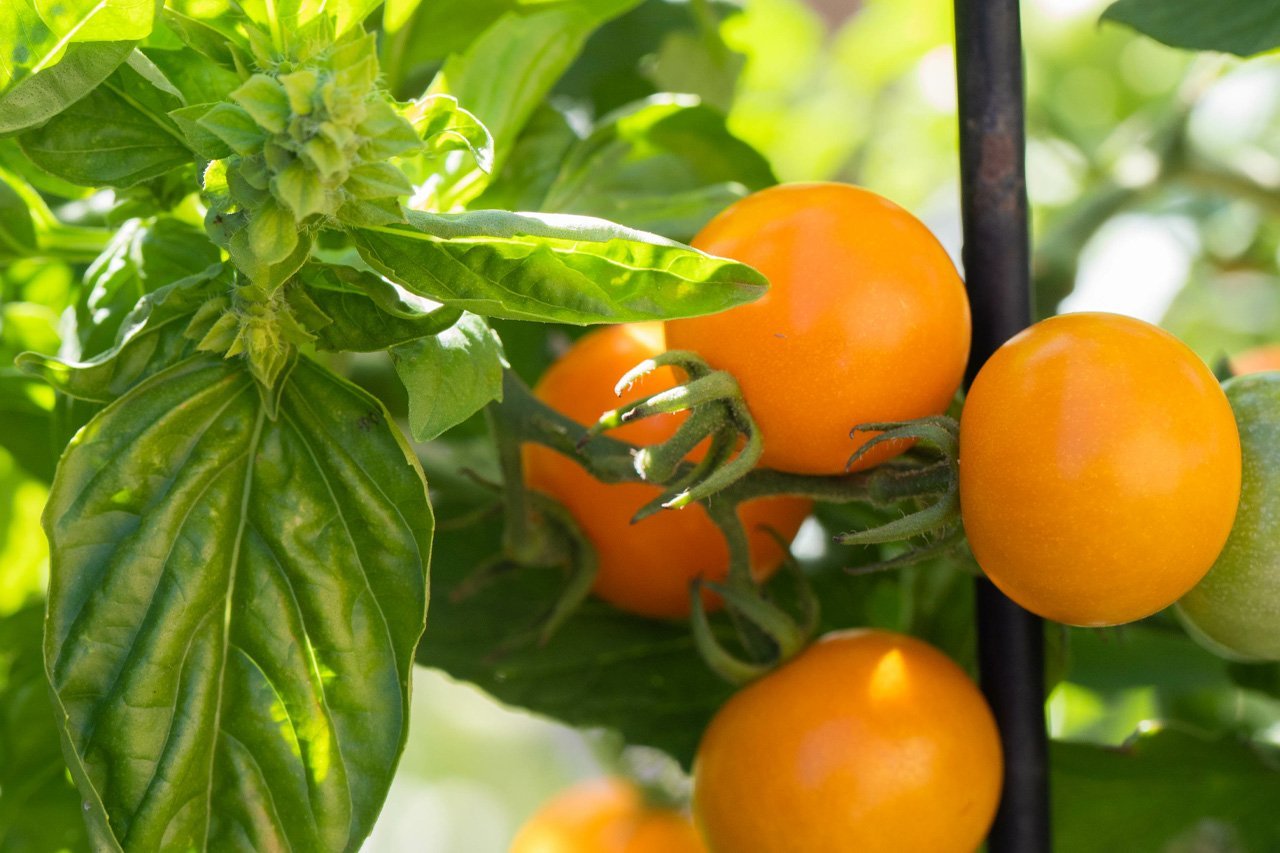
Examples of plants working together include planting garlic with tomatoes. Protecting against insects like tomato hornworm. Marigolds act as a natural insect repellent around heirloom vegetables. Carrots can also help tomatoes by breaking up the soil allowing for better aeration and irrigation.
What are the benefits of Companion Planting?
Companion planting can give you multiple benefits. It can increase your crop yield. Improve your soil. Plus boost your own health and the health of the environment.
These may seem like wild claims. Yet time, after time results have shown that companion planting, is a great way to enrich your garden and life.
Natural Pest Control
Many plants work together to repel pests. One instance of this is planting carrots alongside onions or leeks. Carrot fly is deterred by the smell of both onions and leeks. While carrots produce a smell that puts off onion fly and leek moth.
Herbs such as mint are great defenders. Its aromatic smell discourages flea beetles from chewing holes in cabbage and kale. Also stopping aphids from attacking tomatoes and roses.
Tomatoes secrete solanine, which is a natural insect deterrent to the carrot rust fly.
The beauty of using companion planting as a method of pest is it can be totally organic. So reducing the need for chemical pesticides.
Not only does this benefit the environment but your personal health. Pesticides have increasingly been linked to a number of health conditions in humans.
Attracting Pollinators and Beneficial Insects
We all know the plight of bees and other pollinators.
Much of their decline has been caused by pesticides, especially neonicotinoids. Beneficial insects such as bees, butterflies, and beetles are vital to the natural ecosystem. It has been estimated that between 75 – 95% (https://www.pollinator.org/pollinators) of all flowering plants need help with pollination. More importantly, without pollinators, a 3rd of our food could disappear.
When planning your vegetable garden or flower garden try to make areas available for pollinators and beneficial insects.
Plants like Calendula will attract pollinating insects for your courgettes. Sweet Peas in turn will attract pollinators for your Runner Beans.
Not all insects are bad. Beneficial insects such as predatory wasps or ladybugs will help control pests such as aphids.
Predatory wasps or parasitic wasps pose no harm to humans. Instead, the stingers on the females are used to lay eggs on insect pests such as aphids and caterpillars. Once hatched the young will feed on and kill the host.
Good companion herbs such as Dill, Parsley, and Coriander are good for attracting predatory wasps. As are plants like Statice and Marigold.
Young ladybugs, which are black and orange, eat more pests than their adults. Foster these with herbs such as Dill and Fennel also plants like Golden Marguerite and Marigold.
While planting for parasitic wasps and ladybugs you will also attract hoverflies. These can be confusing as the adults look like little bees while the young look like caterpillars. But they catch and feed on pests such as aphids and mealybugs.
Improving Soil & Growing Conditions
We all know that good soil conditions are necessary for successful gardening of any kind. Mostly we concentrate on preparation before planting out. For a new plot or vegetable garden potatoes are great for the breaking of ground. They can also help control weeds by vying for nutrients, light, and water. Buckwheat is also good for a new area. Its quick decaying properties mean it is great as green manure. Adding calcium as well as nitrogen.
But using the right companion plants can continue your good work during the critical growth stages.
Crops such as Broad Beans and Pole Beans are not only nutritious for us, but also for other plants. They give nitrogen to the soil. Nitrogen is vital for the healthy growth of plants especially sweetcorn.

Natural Pest Control

Attract Beneficial Insects

Improve Soil Conditions
01. Vegetable
We all love them
02. Fruit
Natural Source of Sugar